
LA Pilates assesses each client to tailor programs to their baseline, goals, and limitations. Trainers create progressive plans with measurable milestones and regular reassessments pilates reformer. Sessions use full Pilates apparatus and props for safe modifications, rehabilitation, weight-loss conditioning, or sports-specific work. Pathways guide beginners through fundamentals and advance clients into strength, power, and unilateral or rotational drills. Emphasis on autonomy lets clients choose class levels and track progress. Continue for specific class options and modification examples.
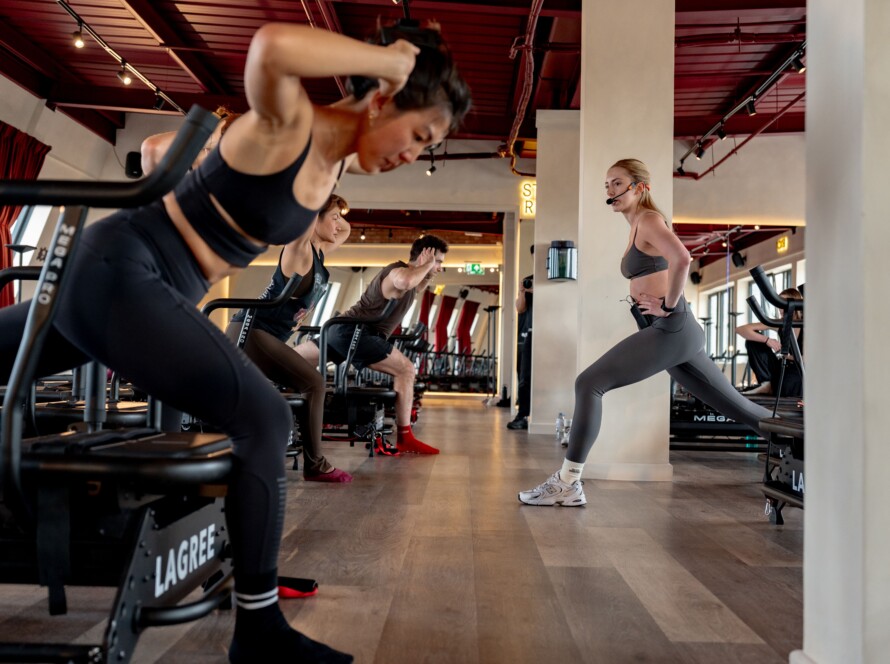
How LA Pilates Adapts Programs to Your Level and Goal
How does LA Pilates tailor its approach to individual needs? LA Pilates assesses baseline mobility https://la-pilatesstudio.com/, strength, and goals, then crafts progressive plans that prioritize autonomy.
Instructors adapt intensity, cueing, and exercise selection so clients move toward independence rather than dependence. Programs balance challenge with safety: regressions offer accessible options, while progressions expand capacity.
Goals—whether improved posture, core stability, or increased functional movement—shape session structure and measurable milestones. Feedback loops and periodic reassessments ensure adjustments align with evolving ability and ambition.
Emphasis rests on educating clients to self-regulate breath, alignment, and effort, fostering confidence to practice outside the studio. The result is a flexible, goal-driven pathway that guarantees movement and supports sustainable personal growth.
LA Pilates Classes & Equipment for Weight Loss, Rehab, Sport
LA Pilates offers targeted classes and a full range of Pilates apparatus—Reformer, Cadillac, Chair, and small equipment—to address weight loss, rehabilitation, and sports performance through evidence-based programming.
Classes for weight loss emphasize full-body, high-efficiency sequences that raise metabolic rate while preserving lean muscle, blending circuit-style Reformer work with dynamic mat and small-prop intervals.
Rehabilitation sessions focus on controlled, progressive loading, joint-friendly patterns, and clinician-informed modifications to restore function and prevent re-injury.
Sports-focused training translates Pilates principles into sport-specific strength, mobility, and neuromuscular control, enhancing power transfer and movement economy.
Instructors individualize progressions, monitor biomechanics, and prioritize autonomy, enabling clients to pursue goals with practical tools, measured progression, and the freedom to move confidently across daily life and athletic pursuits.
Beginner Pathway: Mobility, Breath, and Confidence-Building
The beginner pathway emphasizes gentle mobility progressions that restore joint range and movement quality without strain.
Controlled, breath-focused practice is used to anchor attention and build confidence in movement.
Together these approaches create a steady foundation for gradual skill and strength gains.

Gentle Mobility Progressions
A gentle progression introduces beginner practitioners to foundational mobility, breath coordination, and confidence-building exercises that prioritize safety and steady improvement. It emphasizes small, repeatable movements that restore joint range, cultivate ease, and invite personal autonomy. Guidance focuses on alignment, paced challenges, and noticing improvements without pressure.
- Slow spinal articulations to increase flexibility and relieve tension.
- Controlled hip circles and leg slides for stable lower-body mobility.
- Scapular mobilizations to free the shoulders and improve posture.
- Supported balance drills that foster trust in movement and reduce fear.
- Gentle functional patterns that translate studio gains into daily freedom.
The approach values gradual adaptation, measurable milestones, and practitioner choice, enabling progression toward broader Pilates skills while honoring individual limits.
Breath-Focused Confidence Building
When breath is prioritized alongside gentle movement, beginners build both physiological support and inward confidence that make small challenges feel attainable.
LA Pilates guides breathing patterns that stabilize the core, calm the nervous system, and expand lung capacity, enabling movement with less effort.
Instructors cue accessible exercises linking inhale and exhale to joint-friendly ranges, encouraging exploration without strain.
Progressive breath tasks—paced ribs expansion, diaphragmatic timing, coordinated limb flow—serve measurable milestones that reinforce autonomy.
As breath control deepens, hesitation softens and choices widen: taller posture, longer walks, or subtle strength efforts become options rather than obstacles.
This pathway cultivates freedom through dependable internal cues, so participants move from guarded limitation to confident self-direction in daily life.
Intermediate Pathway: Build Strength, Refine Technique, Scale Load
Advancing into an intermediate Pilates pathway, practitioners focus on systematic strength gains, precise technique refinement, and gradual load progression to bridge foundational skills with higher-performance movement. The approach emphasizes controlled challenge: increasing resistance, refining alignment, and expanding movement range while maintaining breath-led freedom.
Instructors guide individualized progressions, cueing efficient patterns and corrective feedback to empower autonomous practice. Sessions blend apparatus and mat work, promoting muscular balance, joint stability, and fluid passages that support daily vitality without rigidity.
- Progressive resistance tailored to capacity
- Technique drills that prioritize clarity over speed
- Load scaling via springs, bands, and incremental reps
- Mobility routines preserving ease of motion
- Coaching that fosters self-directed exploration
This pathway readies practitioners for more demanding practice while honoring autonomy.
Advanced Pathway: Reformer Challenges, Power, and Athletic Drills
Building on refined technique and scaled resistance, the advanced pathway centers on Reformer-based challenges that test power, coordination, and athletic capacity. Sessions prioritize explosive concentric drives, controlled eccentric returns, and dynamic shifts that cultivate speed, proprioception, and efficient force transfer.
Circuits integrate plyometric springs, unilateral loading, and resisted rotational patterns to simulate sport demands and functional agility. Progressions emphasize precision of breath-timed effort, rhythmic sequencing, and measured overload to expand capacity without compromising alignment.
Instructors tailor drills to encourage autonomy, offering choices in tempo and complexity so practitioners can chase personal thresholds. Outcomes include improved power output, refined motor control, and a resilient, adaptable body ready for varied movement pursuits while preserving the freedom to explore intensity and skill.
Adapting Sessions for Injuries and Mobility Limits at LA Pilates
LA Pilates begins by prioritizing thorough assessment and screening to identify injuries, movement restrictions, and contraindications before programming.
Instructors then select modified exercise options that maintain engagement while protecting vulnerable tissues.
Progression plans are implemented gradually, with measurable milestones and regular reassessment to guarantee safe increases in load and range.
Assessment And Screening
How should an instructor begin when a client arrives with prior injuries or limited mobility? The instructor performs a focused assessment and screening to clarify limits, goals, and safety.
Intake questions, observation, and simple movement tests guide decisions without prescribing specific exercise modifications.
- Review medical history and clearance to ensure freedom to move safely.
- Ask clear questions about pain, prior treatments, and movement goals.
- Observe posture, gait, and range of motion in controlled tasks.
- Perform gentle functional tests (sit-to-stand, shoulder reach) to gauge capacity.
- Document findings and set collaborative, autonomy-supporting plans.
This concise screening prioritizes client autonomy, identifies contraindications, and informs tailored session planning while avoiding prescriptive exercise details reserved for subsequent sections.
Modified Exercise Options
Following the screening, the instructor translates assessment findings into a range of modified exercise options tailored to each client’s injuries and mobility limits. Exercises are adjusted by altering range of motion, load, tempo, and support to preserve integrity while maintaining effectiveness.
Props—rolls, blocks, straps, and reformer settings—offer immediate adaptations that empower movement without risk. For joint sensitivities, neutral alignments and reduced impact variations protect structures.
For limited flexibility, partial-range and assisted movements build usable strength. Breath cues and emphasis on control keep sessions safe and freeing, letting clients move confidently within their capacities.
Clear demonstration and hands-on guidance enable autonomy, so participants leave sessions equipped to choose adaptations that honor progress and personal freedom.
Gradual Progression Plans
When injuries or mobility limits are present, instructors design gradual progression plans that prioritize safety while restoring function and confidence. The approach emphasizes autonomy, measurable milestones, and gentle challenge so participants regain movement without fear.
Progressions adapt tempo, range, and load; reassessments inform next steps. Clear communication and choice empower clients to explore limits and expand capability at their own pace.
- Begin with diagnostic movement screening to identify restrictions and safe zones.
- Implement low-impact, controlled exercises emphasizing breath, alignment, and proprioception.
- Incrementally increase range of motion and resistance based on pain-free feedback.
- Introduce functional tasks that translate Pilates gains into daily freedom.
- Schedule regular reviews to adjust goals, celebrate progress, and preserve long-term mobility.
Set Goals, Track Progress, and Pick Your Next Class
Setting clear, measurable goals gives practitioners a roadmap for progress and helps instructors recommend appropriate class levels and modifications.
LA Pilates encourages goal-setting that reflects individual freedom—choices about strength, mobility, stress relief, or performance.
Progress is tracked with objective markers: increased repetitions, improved form, range-of-motion gains, and subjective notes on energy and comfort.
Instructors review these metrics to suggest the next class: a foundational session for consolidation, a challenge class to build capacity, or a restorative offering for recovery.
Scheduling flexibility and transparent benchmarks let students pivot without guilt.
Regular check-ins every few weeks keep the path adaptive, ensuring each next class aligns with evolving goals and preserves the autonomy central to a sustainable Pilates practice.
Conclusion
LA Pilates consistently tailors its programming to meet varied fitness levels and objectives, offering a clear progression from foundational mobility and breath work to advanced reformer challenges and athletic drills. Classes and equipment support weight loss, rehabilitation, and sport-specific training while instructors modify sessions for injuries and mobility limits. By setting measurable goals and tracking progress, participants move confidently through beginner, intermediate, and advanced pathways, ensuring continued improvement and sustainable results aligned with personal aims.