
If you need to separate and analyze ions in complex mixtures, ion chromatography offers a reliable method to do just that. By passing your sample through a resin-filled column Chlorine test, you can exploit differences in ion charge and affinity for precise separation. This technique isn’t just sensitive and fast—it also requires minimal preparation. But how exactly does it work, and what makes it so widely applicable across industries?

How Does Ion Chromatography Work?
How exactly does ion chromatography work? You start by injecting a liquid sample containing ions into a column filled with a resin that separates ions based on their charge and affinity.
As your sample flows through, ions interact differently with the resin, causing them to separate over time.
You then detect these ions as they exit the column Lab Alliance, often using conductivity or other detectors, allowing you to identify and quantify them.
This method gives you the freedom to analyze complex mixtures with precision and speed, unlocking insights without extensive sample preparation.
Ion chromatography puts control in your hands, letting you explore and understand the ionic composition of solutions in a way that’s both efficient and reliable.
It’s a powerful tool that adapts to your analytical needs.
What Equipment Is Needed for Ion Chromatography?
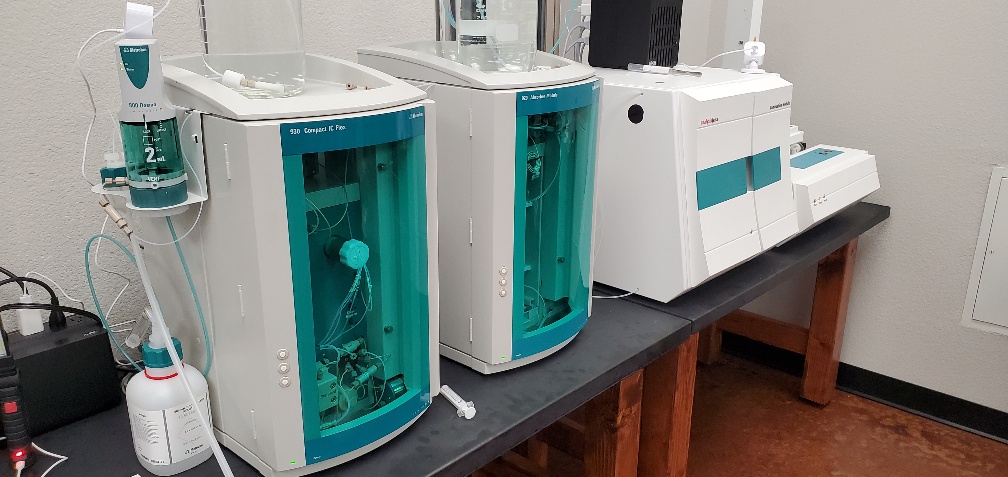
Once your ions separate inside the column, the right equipment is key to accurately detecting and analyzing them. You’ll need a high-performance pump to deliver a consistent flow of the eluent, ensuring precise separation. A sample injector introduces your sample smoothly without disrupting the flow.
The heart of the system is the ion chromatography column, packed with resin that separates ions based on charge and size. After separation, a sensitive detector, often a conductivity detector, measures ion concentrations.
You’ll also want a suppressor to reduce background conductivity, improving signal clarity. Finally, a data system records and processes results, giving you freedom to interpret your data with ease.
With this setup, you harness ion chromatography’s full potential, breaking free from guesswork.
Why Choose Ion Chromatography?
Why should you choose ion chromatography over other analytical methods? It offers you unmatched precision and flexibility, allowing you to analyze a wide range of ions efficiently. With ion chromatography, you’re not limited by complex sample preparation or time-consuming procedures. You gain control and freedom in your work through its straightforward, automated process.
Here’s why ion chromatography stands out:
- High sensitivity for detecting trace ions
- Ability to analyze multiple ions simultaneously
- Minimal sample preparation needed
- Rapid and reproducible results
- Adaptable to various sample types and concentrations
Where Is Ion Chromatography Used?
Ion chromatography’s precision and versatility make it a go-to technique across various fields. You’ll find it in environmental monitoring, where it detects pollutants in water and soil, helping protect ecosystems.
In pharmaceuticals, it guarantees drug safety by analyzing ionic impurities.
Food and beverage industries use it to verify product quality and safety by measuring salt, sugar, and preservatives.
You can rely on ion chromatography in chemical manufacturing to control raw materials and finished products.
Even in clinical labs, it helps analyze bodily fluids for diagnostic purposes.
Wherever you need accurate ion analysis—whether to comply with regulations or to innovate—ion chromatography offers the freedom to explore and trust your results with confidence.
How to Get Accurate Results With Ion Chromatography
To get accurate results with ion chromatography, you need to focus on proper sample preparation and instrument calibration. Ensuring your samples are clean and free from particulates prevents column damage and signal interference.
Regular calibration with standards guarantees your instrument measures precisely. Here’s what you should do:
- Filter and dilute samples appropriately
- Use fresh and high-purity reagents
- Calibrate the system regularly with known standards
- Maintain and clean the column routinely
- Monitor system performance through quality control samples
Conclusion
Ion chromatography offers you a powerful way to separate and analyze ions quickly and accurately. With minimal sample prep and high sensitivity, it fits perfectly in fields like environmental testing, pharmaceuticals, and food safety. By understanding the principles and using the right equipment, you’ll get precise results every time. Choosing ion chromatography means you’re relying on a trusted, versatile method that makes complex ion analysis simpler and more efficient for your work.